
BUYING GUIDE / DESK-BASED
Buying a Chinese EV or PHEV in New Zealand? 7 Checks Before You Sign
Start with your parking space, not the spec sheet. A practical guide to charging, the full price, local support and the questions worth getting answered in writing.
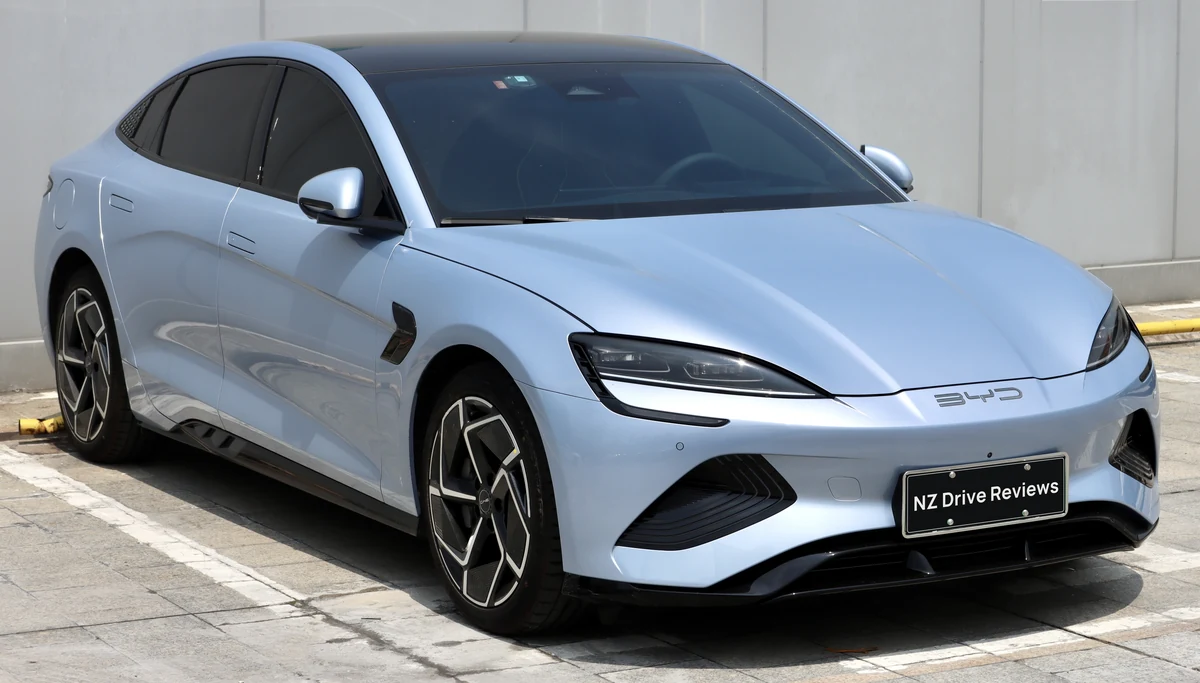

If a Chinese EV or plug-in hybrid has made your shortlist, you probably already know what you like about it. The harder question is what you still need to know before putting money down.
Where will it charge on an ordinary Tuesday? What is included in the quote? If something goes wrong, which business will deal with it?
Those questions deserve more weight than a verdict on an entire country’s cars. This guide focuses on Chinese-brand EVs and PHEVs, using current New Zealand BYD documents as examples. The checks apply to other brands too; they are not evidence of problems unique to Chinese cars.
This guide is for private buyers considering a new or NZ-new car from a registered dealer. It covers the practical checks before you sign, from charging to ownership costs. We haven’t road-tested the cars discussed here.
First, choose a charging plan
A battery-electric vehicle (BEV) runs on electricity alone. A plug-in hybrid (PHEV) has a rechargeable battery and a combustion engine. A conventional hybrid cannot be plugged in.[1]
Our starting point: with reliable home or workplace charging, put both plug-in options on the shortlist and work through your normal journeys. Without it, price and rehearse a public-charging routine before deciding. For a PHEV, be honest about how often you will plug it in; do not budget as though every kilometre will be electric.
1. Can you charge where you actually park?
Start with the parking space, not a charger pin on a map. If you rent or use a shared garage, ask whoever controls the property what installation is possible and what permissions you need. Then obtain advice and a quote from a registered electrician.
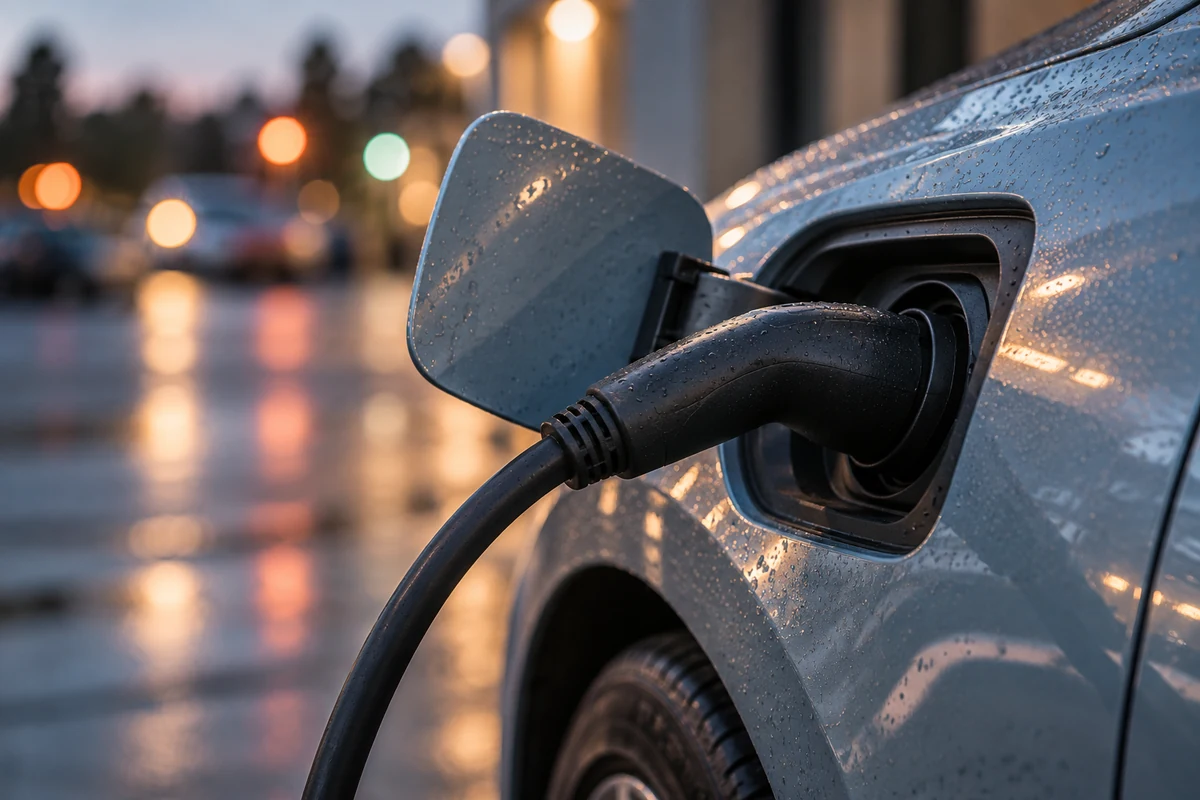
EECA says wall-mounted charging units must be installed by a registered electrician. It also says not to use extension cables or run a charging cable across a footpath.[2] A wall socket in the garage may look convenient, but check whether it’s suitable for charging the car.
If public charging will be your normal routine, check the connectors, prices, opening hours and parking restrictions at the sites you expect to use. Identify a backup and try the routine at the time you would actually go. EECA notes that charger apps can show known outages and recommends keeping enough charge in reserve to reach another site.[2]
Take away: Work out where you’ll charge. Get any permissions you need and, if installation is required, a quote from a registered electrician. Discuss wiring with the electrician and property permissions with your landlord or property manager.
2. What is the actual drive-away price?
Ask for one written, itemised total for the exact vehicle. Separate the car, colour or accessory options, on-road costs and any other charges. Consumer Protection specifically advises checking whether the agreed total includes on-road costs and asking for their breakdown.[3]

Keep the cash price separate from the borrowing decision. If finance is offered, compare the deposit, term, repayments, interest and fees, including any final lump sum. The lender’s disclosure must set out the loan’s costs and repayment terms; a weekly payment alone is not the full comparison.[11]
Have the dealer record the offer’s expiry, delivery commitment and anything you are relying on. Read the sales agreement before paying a deposit: Consumer Protection warns that a cash deposit may not be refundable simply because you change your mind.[3]
Take away: a dated quote and the relevant sales and finance terms, not a photograph of a windscreen sticker.
3. What will your own kilometres cost?
Build the comparison around your annual distance and where you will buy energy. Include electricity and petrol where applicable, insurance, servicing, tyres, vehicle licensing (rego) fees, WoF fees when due, and borrowing costs. Consumer Protection’s ownership checklist makes the same broad point: purchase price and monthly payments are only part of the bill.[6]

Road user charges belong in that budget. For the typical two-axle light passenger cars covered here, in the 1,001–3,500kg gross-vehicle-mass band, NZTA currently lists $76 per 1,000km for a BEV and $38 per 1,000km for a petrol PHEV, including GST. Administration fees are additional.[4][5]
At an illustrative 15,000km a year, that is $1,140 and $570 respectively, before administration fees. This is a RUC calculation, not an EV-versus-PHEV savings claim: the PHEV also needs a petrol-and-electricity budget. RUC is based on the distance the vehicle travels, not just its electric kilometres.[4]
Grab a pen and map out the numbers for each car on your shortlist:
Annual distance: ____ km
Home/work charging price: ____ c/kWh
Public charging price and share of charging: ____
Electricity use and, for a PHEV, petrol use: ____
Annual RUC + fees / insurance / servicing / tyres: ____
Rego / WoF when due: ____
Finance interest and fees, if any: ____
Get insurance and service quotes rather than assuming they will match your current car. Treat any advertised fuel or electricity figure as a stated test result, not your household’s measured result.
4. Are you looking at the exact NZ-spec car?
Ask for the current NZ specification sheet for the variant on the order. Record its model year, drivetrain, battery, included charging equipment and delivery terms. Try the features that matter to you with your own phone and usual passengers.
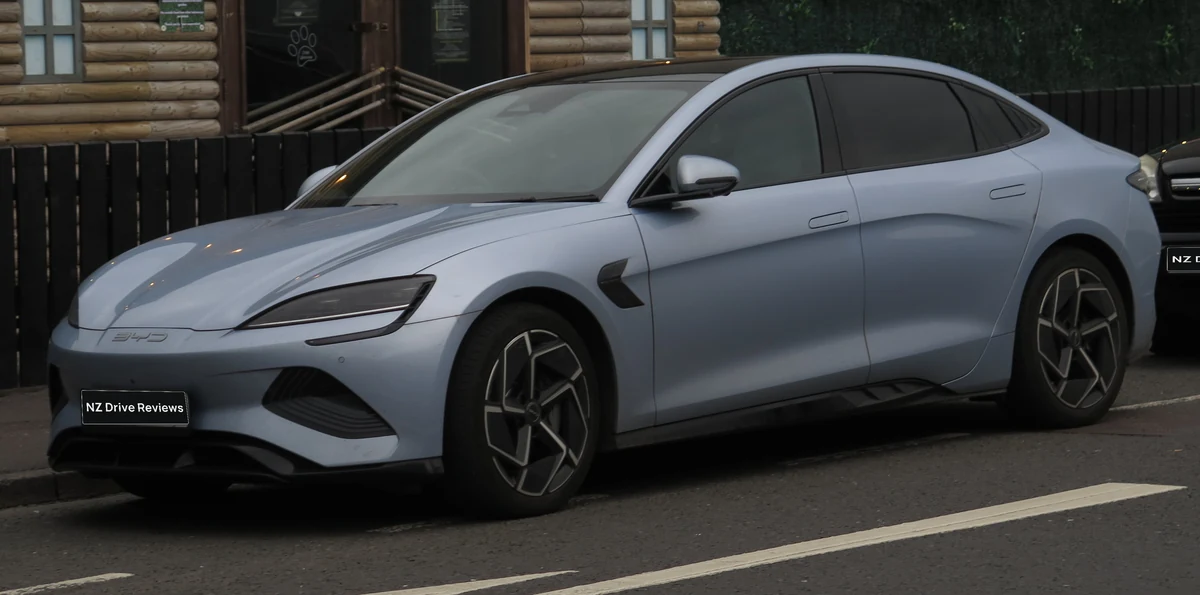

Here is why the small print matters. BYD NZ’s SEALION 6 sheet dated 1 October 2026 lists the Dynamic Extended as front-wheel drive and the Premium Extended as all-wheel drive.[7] Check which variant is on your quote before comparing specifications.
For the Dynamic Extended, the same sheet lists combined fuel-consumption figures of 0.8L/100km under its 25–100% battery state-of-charge (SOC) condition, and 4.8L/100km below 25% SOC. Its notice identifies ADR 81/02 as the test basis and warns that results may not reflect real-world consumption.[7]
These are BYD’s published test figures. Ask the dealer which battery condition and test standard apply to the figure you’re being shown, then consider how often you’ll charge the car.
Take away: the dated NZ sheet and written confirmation of the ordered variant. Do not let an overseas review, an older brochure or a promise of future software stand in for that confirmation.
5. Does the safety rating cover this exact version?
Open the rating record, not just an advertisement showing stars. Match the model, build dates and variant scope, and read the rating’s year or datestamp.
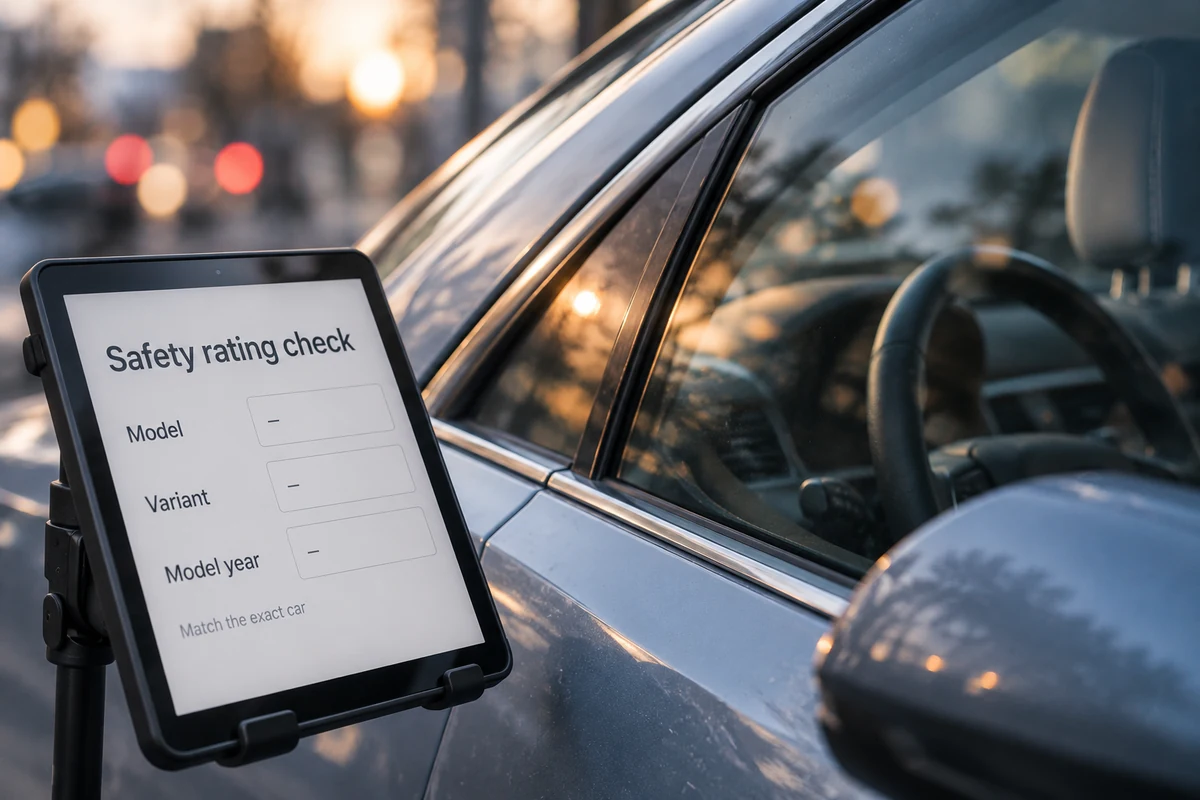
For example, ANCAP’s BYD SEALION 6 record lists build dates from March 2024, applicability to PHEV variants, and a 2023 rating datestamp.[8] The rating year is therefore not the same thing as the car’s model year.
ANCAP also explains the evidence behind this case: the rating began with testing of the European battery-electric SEAL-U, then additional frontal-offset and pole testing supported its extension to the SEALION 6 plug-in hybrids sold in Australia and New Zealand.[8] ANCAP confirmed the extension after additional testing. For another model or variant, check its own rating record rather than relying on a similar name or appearance.
Take away: the actual rating record matched to the vehicle. If the match is unclear, ask the distributor or ANCAP to clarify it rather than guessing.
6. Who handles warranty, servicing and repairs here?
Split the headline warranty into questions about the whole vehicle, the traction battery and the practical repair arrangements.
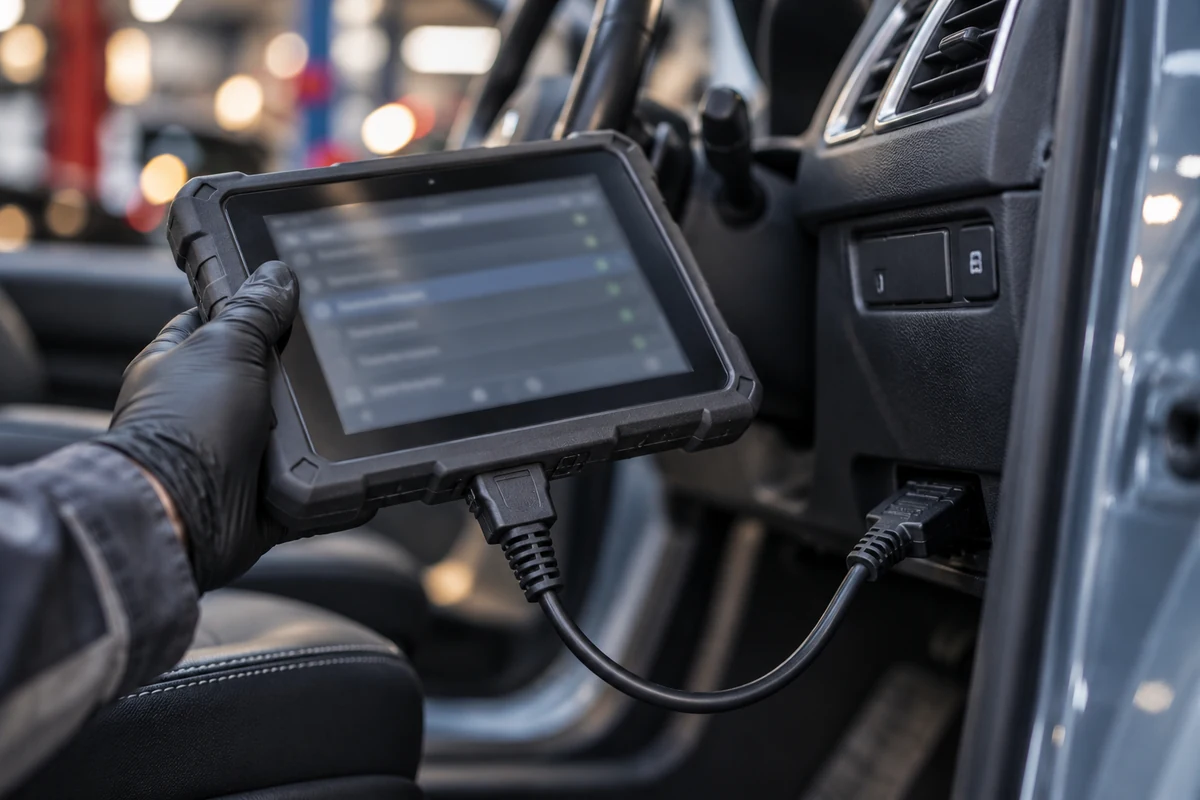
BYD NZ’s current FAQ describes a six-year/150,000km vehicle warranty and an eight-year/160,000km traction-battery warranty, with the time or distance limit applying first. It also says coverage may vary by model and directs buyers to the applicable warranty booklet.[9] That is a starting point for checking the contract, not a claim that every component has the same cover.
Ask for the actual handbook. Check exclusions, servicing requirements, transfer conditions, and whether there is a battery-capacity threshold and how it is measured. Separately, identify the workshop that would assess a fault, the contact for warranty approval and any written arrangements for towing or a replacement car. Ask what happens if a part is not available locally; this guide has not measured parts waiting times.
For a dealer sale to a consumer, the manufacturer’s warranty does not replace rights under the Consumer Guarantees Act. Consumer Protection says those rights can still apply after a warranty expires; that does not make every later fault an automatic refund.[10]
Take away: the applicable warranty documents, service schedule and named local contacts. Get independent advice if the contractual or legal position is unclear.
7. What can you actually know about resale value?
Allow for depreciation, but ask for evidence behind any forecast. Consumer Protection notes that cars, especially new ones, generally lose value after purchase.[6]

When assessing a residual-value estimate, ask what supports it. Are the comparisons the same variant, age and mileage? Are they advertised asking prices, trade-in offers or completed sales? Keep those categories separate rather than treating a listing as proof of what an owner received.
For a recent model without a comparable local ownership history, mark the gap. If a dealer offers a guaranteed future value or buy-back arrangement, request the contract and check the term, kilometre limit, condition requirements, servicing obligations and who provides the guarantee. Do not treat an informal estimate as a contractual commitment.
Then test your own decision against a lower resale outcome than you hope for. If it would make the purchase unaffordable, revisit the price or budget rather than relying on an optimistic forecast.
Take away: the valuation basis, any contractual conditions, and an honest list of what remains unknown.
Before you pay a deposit
Use the seven-question card below to collect answers, not just reassurance. Some need to come from an electrician, insurer, lender or independent valuer rather than the salesperson.
Keep the quote, applicable specifications, warranty documents and relevant correspondence together. Consumer Protection recommends retaining the sales agreement, original advertisement and other sale documents.[10] Arrange a test drive as well: this guide has not assessed how any of these cars drives or fits your family.
Before you commit, be clear about which answers you can verify, what remains uncertain, and whether the car still makes sense for you.
Sources checked on 2 October 2026 (New Zealand time). All dollar amounts are NZD. Rates, specifications, offers and warranty terms can change; check the linked sources and the documents for your vehicle before committing. This is general buying information, not individual financial or legal advice. Brand examples illustrate how to check documents, not endorsements.
Sources
- [1] EECA — Compare electric vehicle types and benefits ↩
- [2] EECA — How to charge your EV at home and on the road ↩
- [3] Consumer Protection — Car sales contracts and warranties ↩
- [4] NZTA — About RUC ↩
- [5] NZTA — RUC rates and transaction fees ↩
- [6] Consumer Protection — Researching cars and sellers ↩
- [7] BYD Auto NZ — SEALION 6 specification sheet, 1 October 2026 ↩
- [8] ANCAP — BYD SEALION 6 safety rating and report ↩
- [9] BYD Auto NZ — Frequently Asked Questions ↩
- [10] Consumer Protection — Buying a car from a dealer ↩
- [11] Consumer Protection — Getting a loan for your car ↩
Quick card
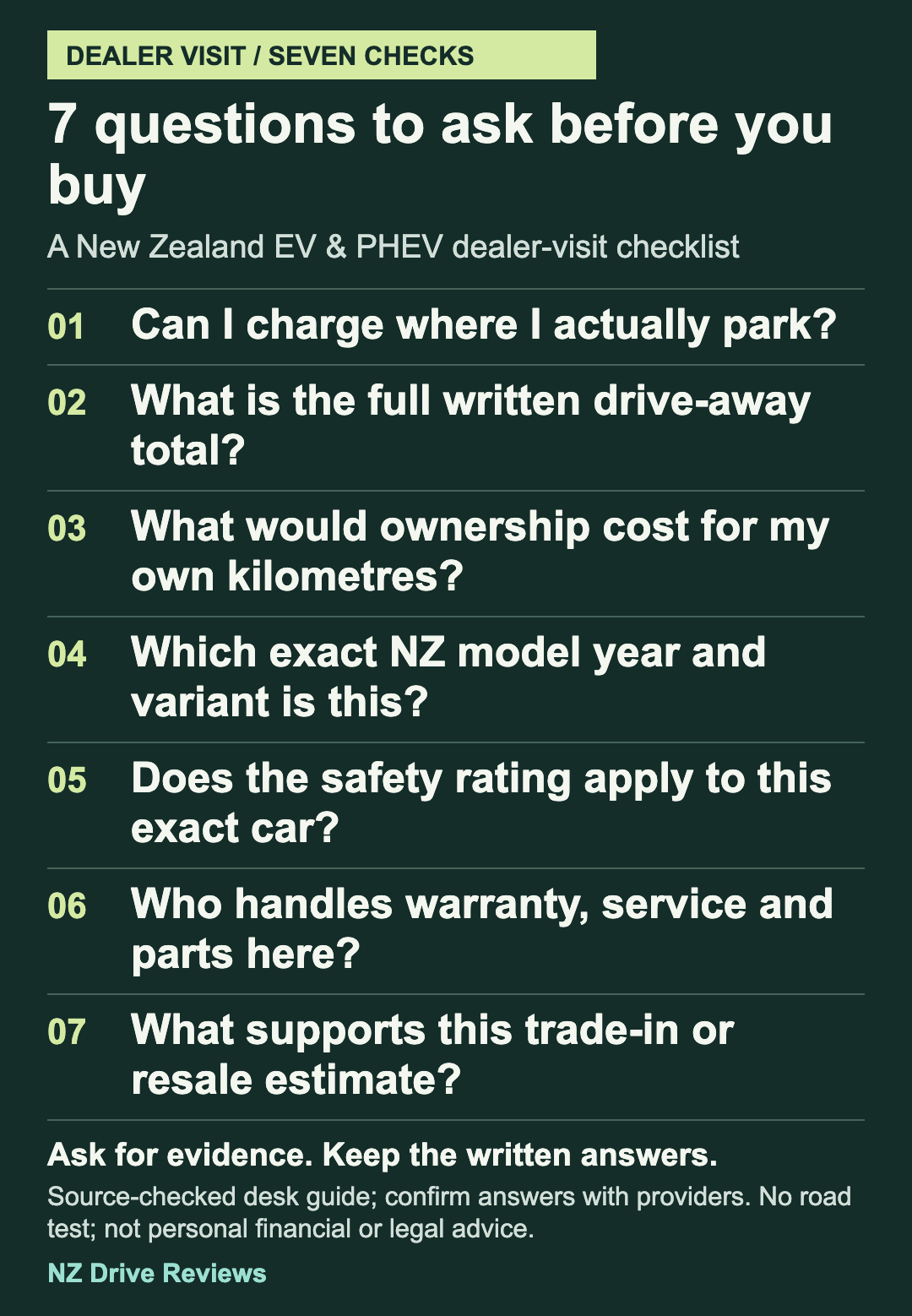
Seven complete questions only. Save this compact card; use the detailed checklist below for the evidence to request.
DEALER VISIT / SEVEN CHECKS
7 questions to ask before you buy
A New Zealand EV & PHEV dealer-visit checklist
Can I charge where I actually park?
What is the full written drive-away total?
What would ownership cost for my own kilometres?
Which exact NZ model year and variant is this?
Does the safety rating apply to this exact car?
Who handles warranty, service and parts here?
What supports this trade-in or resale estimate?
Detailed checklist — evidence to request
The same seven questions, with the evidence to request from the dealer and other relevant providers.
DEALER VISIT / SEVEN CHECKS
DEALER VISIT / KEEP THE ANSWERS
7 questions to ask before you buy
A New Zealand EV & PHEV dealer-visit checklist
Can I charge where I actually park?
Ask for: Charging plan, permissions and installation advice.
What is the full written drive-away total?
Ask for: Itemised quote, fees, finance and offer conditions.
What would ownership cost for my own kilometres?
Ask for: Energy, RUC, insurance, finance and service assumptions.
Which exact NZ model year and variant is this?
Ask for: NZ spec sheet, included equipment and delivery terms.
Does the safety rating apply to this exact car?
Ask for: Rating record, year, build dates and variant scope.
Who handles warranty, service and parts here?
Ask for: Local contacts, written terms, limits and exclusions.
What supports this trade-in or resale estimate?
Ask for: Valuation basis, comparable sales and what is unknown.
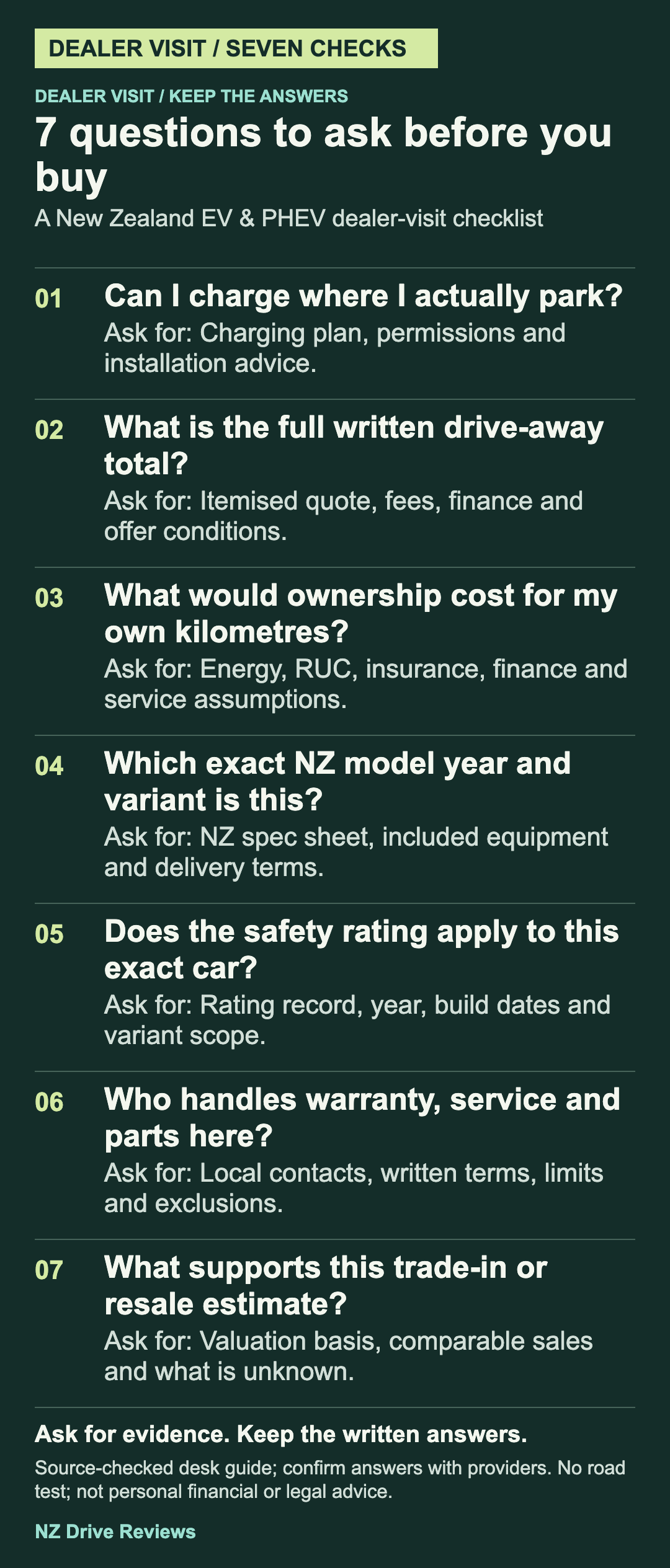
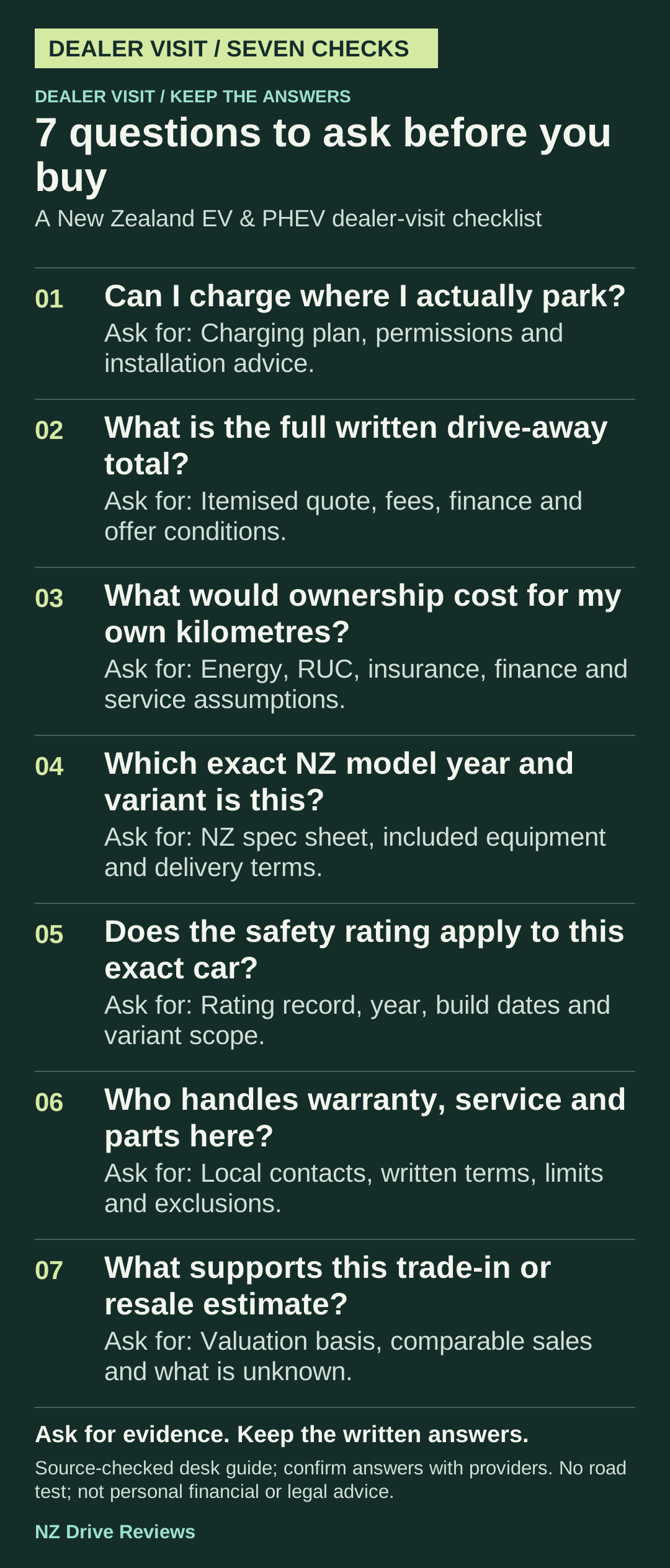
On iPhone, the image may open instead: touch and hold it for saving options. It is not automatically saved. Designed checklist card, not a generated car photograph.
Source and limitations: Based on Article 01, source-checked on 2 October 2026. Prompts need answers from the relevant providers. These prompts do not establish a vehicle’s costs, safety, warranty or resale value.